Floor Layout Carpet Psychology: Spatial Traps for Table Players
Every pit boss worth their salt knows the carpet isn't decoration—it's a behavioral control grid, and the house engineers it to bleed you dry before you ever touch a chip. 🎰 Walk into any serious gaming floor and you're not navigating open space; you're threading a maze of spatial traps calibrated to fragment your focus, slow your exit reflex, and keep your wallet anchored to the felt. This isn't paranoia. It's industrial design weaponized against the player.
The Circulation Loop Nobody Warns You About
Casino floor plans almost never use straight corridors. They use what layout technicians call the "forced serpentine"—a curving path that hides sightlines to the exits while continuously exposing you to fresh banks of tables. The carpet pattern reinforces this: swirling, high-contrast motifs that visually churn underfoot, making distances feel shorter than they are. You think you walked twenty meters. You actually walked sixty, past four blackjack pits and two roulette wheels. That carpet psychology is deliberate. Busy patterns suppress spatial memory, and suppressed spatial memory means you lose track of how long you've been losing. 😵

Color Temperature and the Losing Trance
Look down. That deep red and burgundy palette dominating most pit carpets isn't chosen for elegance. Red-spectrum flooring raises arousal and lowers the perceived passage of time—players in red-dominant zones consistently overestimate how long they've played by a brutal margin. Pair that with low ambient lighting and the carpet's noise-dampening pile, and you get sensory isolation. The carpet swallows the sound of your footsteps, so the only audio feedback left is chips clacking and slot reels spinning. That acoustic funnel is a trap, plain and simple. The floor wants you dissociated and reactive, never reflective. 🔥
Anchor Points and the Pull of the Felt
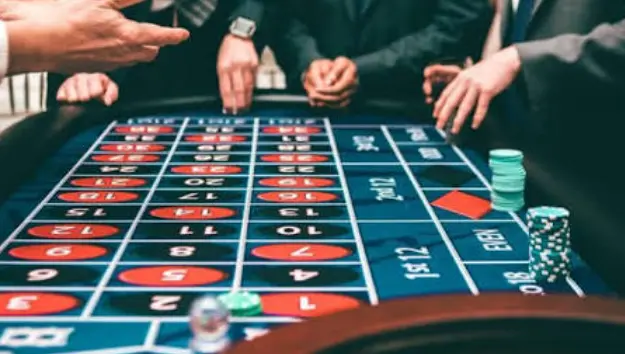
Here's the mechanic that separates amateur layouts from predatory ones. Strategic carpet inserts—darker patches, geometric medallions, even slightly raised pile near high-margin tables—create visual anchors that draw foot traffic like magnets. Table players respond to these anchors unconsciously, drifting toward whichever felt cluster sits on the strongest carpet contrast. Operators know it. That's why the highest-edge games get the loudest floor patterns. You're not choosing a table. The floor layout chose it for you, and the carpet sold the decision before your brain caught up. 🎲
Escape Geometry and the Exit-Velocity Problem
The final layer is exit geometry. Winning players move fast and leave; the floor design punishes that velocity. Exit paths are carpeted in low-contrast, low-arousal tones—deliberately dull—so they never register as destinations. Meanwhile the gaming floor's visual energy stays concentrated inward. The result: your winning run ends not because you decided to stop, but because you literally couldn't locate a clean line out without crossing three more pits. Every step toward the door runs a gauntlet of freshly shuffled decks and flashing progressives. Spatial trap complete. The carpet didn't take your money directly—it just made sure you never found the reason to walk away. 💸