The Silent Revolution: How Casino Homomorphic Encryption Reshapes Data Security
In the high-stakes world of digital gambling, data integrity is the ultimate currency. 🎰 While traditional security protocols rely on perimeter defense, Casino Homomorphic Encryption emerges as the cryptographic holy grail. This isn't merely about locking the vault; it's about processing sensitive player data, wagering patterns, and financial transactions without ever decrypting the underlying information. For operators and high-rollers alike, this technology represents a paradigm shift from reactive security to proactive, mathematical certainty.
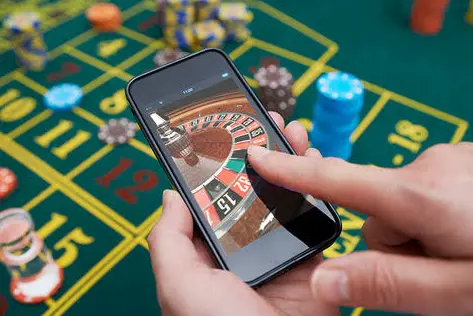
Deconstructing the Cryptographic Architecture of Casino Homomorphic Encryption
At its core, Casino Homomorphic Encryption allows complex computations to be performed on ciphertext. In a live dealer scenario, this means verifying a player's age, geolocation, and creditworthiness against regulatory databases without exposing the raw personal identifiable information to the game server. The math is staggering: fully homomorphic schemes support arbitrary operations, enabling real-time fraud detection algorithms to analyze betting sequences while the data remains encrypted. This eliminates the "trusted third party" vulnerability, a common attack vector in legacy iGaming platforms.
Mitigating Insider Threats and Regulatory Scrutiny in iGaming
The insider threat is the casino industry's dirty secret. Database administrators with privileged access can siphon player rolls and PII. By implementing Casino Homomorphic Encryption, even a rogue admin with root access sees only cryptographic noise. Furthermore, for jurisdictions with stringent data localization laws, this encryption model facilitates cross-border analytics without violating data sovereignty. Auditors can run compliance checks on encrypted ledgers, ensuring anti-money laundering (AML) protocols are met without decrypting a single byte of player data. 😎

Performance Latency and the Future of Encrypted Live Dealer Games
The historical Achilles' heel of homomorphic encryption has been computational overhead. However, lattice-based cryptography and hardware acceleration (FPGA/ASIC) are slashing latency. Modern implementations now support sub-second encrypted shuffling and dealing protocols. This means provably fair gaming can evolve into provably private gaming. Players can verify the integrity of a shuffle without the server ever seeing the cards. As edge computing matures, expect to see encrypted biometric authentication for high-limit rooms, where facial recognition templates are matched in the encrypted domain, rendering spoofing attacks mathematically futile.
Strategic Implementation for Casino Operators and Tech Providers
Adopting this framework requires a hybrid approach. Start with selective encryption for high-value transactions and PII storage, then scale to real-time game logic. Collaborate with cryptographic libraries that support CKKS or BFV schemes. The operational cost is non-trivial, but the return on investment is measured in avoided fines, enhanced player trust, and a fortress-like reputation. 🛡️ In an era where a single data breach can dismantle a brand, treating encryption as a computational tool rather than a storage mechanism is the definitive competitive advantage.